
kajalofficial.com

Uncategorized

Uncategorized

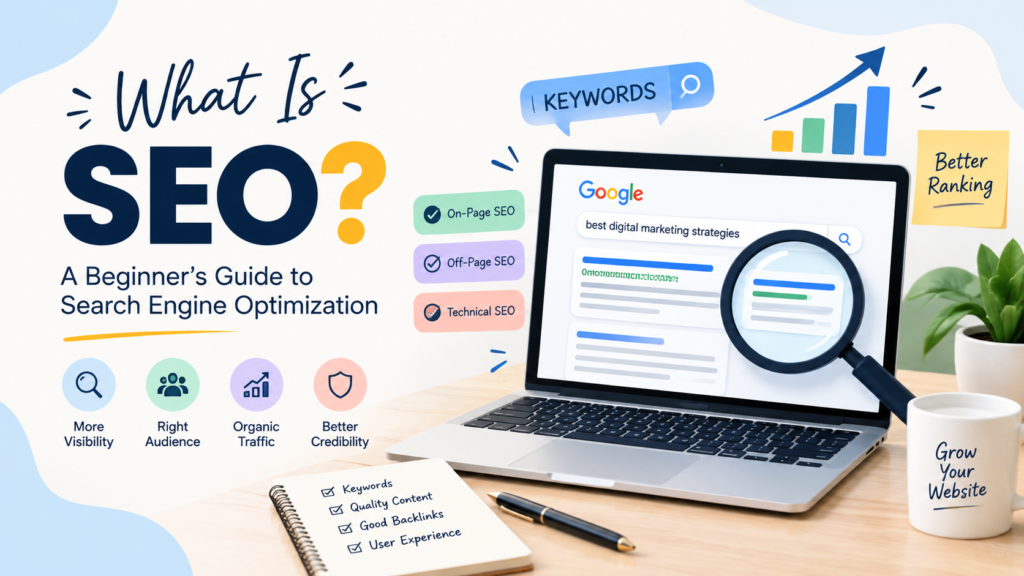
What Is SEO? A Beginner’s Guide to Search Engine Optimization

SEO (Search Engine Optimization) is one of the most important parts of digital marketing. Whether you own a small business, run an online store, or have a personal website, SEO can help people find your website when they search on Google and other search engines. In this beginner-friendly guide, we’ll understand what SEO is, how it works, why it matters, and some simple SEO practices you can start using. What Is SEO? SEO stands for Search Engine Optimization. It is the process of improving a website and its content so that search engines can better understand it and show it to people searching for relevant information. For example, imagine you have a website that provides digital marketing services. Someone searches Google for “digital marketing services for small businesses.” If your website is properly optimized for relevant searches, search engines may consider your page as a useful result. The goal of SEO is not simply to get more visitors. It is to attract the right visitors who are genuinely interested in your products, services, or content. How Does SEO Work? Search engines such as Google use automated systems to discover, understand, and organize web pages. SEO generally involves three important areas: 1. Crawling Search engines use automated programs called crawlers to discover webpages and collect information from them. 2. Indexing After discovering a webpage, the search engine analyzes its content and may store it in its index. This allows the page to potentially appear in search results. 3. Ranking When someone searches for something, the search engine determines which indexed pages are most relevant and useful for that particular search. SEO helps make your website easier for both search engines and users to understand. Why Is SEO Important? SEO can provide several benefits for businesses and websites. 📈 1. Increases Website Visibility A well-optimized website has a better opportunity to appear when people search for relevant topics, products, or services. 👥 2. Brings Relevant Traffic SEO can help attract people who are already searching for something related to what your website offers. 💰 3. Can Reduce Dependence on Paid Ads Paid advertising can bring traffic quickly, but SEO can help generate organic traffic over time without paying for every individual click. 🤝 4. Builds Credibility People often trust websites that provide useful, relevant, and well-organized information. A strong presence in search results can also help improve brand visibility. 📱 5. Improves User Experience Good SEO isn’t only about search engines. Many SEO practices—such as improving page speed, making content readable, and creating mobile-friendly pages—also make websites easier to use. Different Types of SEO SEO is not just one activity. It includes several areas. On-Page SEO On-page SEO focuses on elements on your website, such as: The goal is to make your content useful, understandable, and relevant. Off-Page SEO Off-page SEO involves activities outside your website that can contribute to its reputation and visibility. One important example is earning backlinks from other reputable websites. Other activities can include building brand awareness and promoting useful content. Technical SEO Technical SEO focuses on aspects that help search engines access and understand your website. Examples include: What Are Keywords in SEO? Keywords are words or phrases that people type into search engines when looking for information. For example: “best digital marketing strategies” could be a keyword related to a digital marketing website. Keyword research helps you understand what your target audience is searching for so you can create content that answers their questions. However, keywords should be used naturally. Keyword stuffing, or repeatedly adding keywords just to manipulate rankings, can make content difficult to read and may be harmful to your SEO efforts. Simple SEO Tips for Beginners If you’re new to SEO, start with these basic practices: ✅ Create Helpful Content Write content that genuinely answers your audience’s questions. ✅ Use Clear Headings Organize your content with descriptive headings and subheadings. ✅ Optimize Page Titles Create concise and descriptive titles that clearly communicate what each page is about. ✅ Use Relevant Keywords Include important search terms naturally where they make sense. ✅ Make Your Website Mobile-Friendly Your website should work well on smartphones, tablets, and computers. ✅ Improve Page Speed A faster website can provide a better experience for visitors. ✅ Add Internal Links Link related pages on your website to help visitors discover more content. ✅ Optimize Images Use appropriate image formats and descriptive alt text where useful. Common SEO Mistakes to Avoid Beginners often make a few common mistakes when starting SEO. Keyword stuffing: Using the same keyword excessively. Copying content: Publishing duplicate or copied content instead of creating something useful and original. Ignoring mobile users: Designing only for desktop screens. Using misleading titles: Creating titles that don’t accurately represent the page content. Focusing only on rankings: Remember that attracting visitors is only useful if your website provides something valuable to them. How Long Does SEO Take? SEO is generally a long-term strategy rather than an overnight solution. The time required to see meaningful results can vary depending on factors such as competition, website quality, content, technical issues, industry, and the authority of the website. Instead of expecting instant results, focus on consistently improving your website and creating useful content. Final Thoughts SEO is an essential part of digital marketing because it helps businesses and websites become more discoverable in search engines. You don’t need to be an SEO expert to get started. Begin with the basics: create helpful content, understand your audience, use relevant keywords naturally, improve your website experience, and keep learning.
Uncategorized

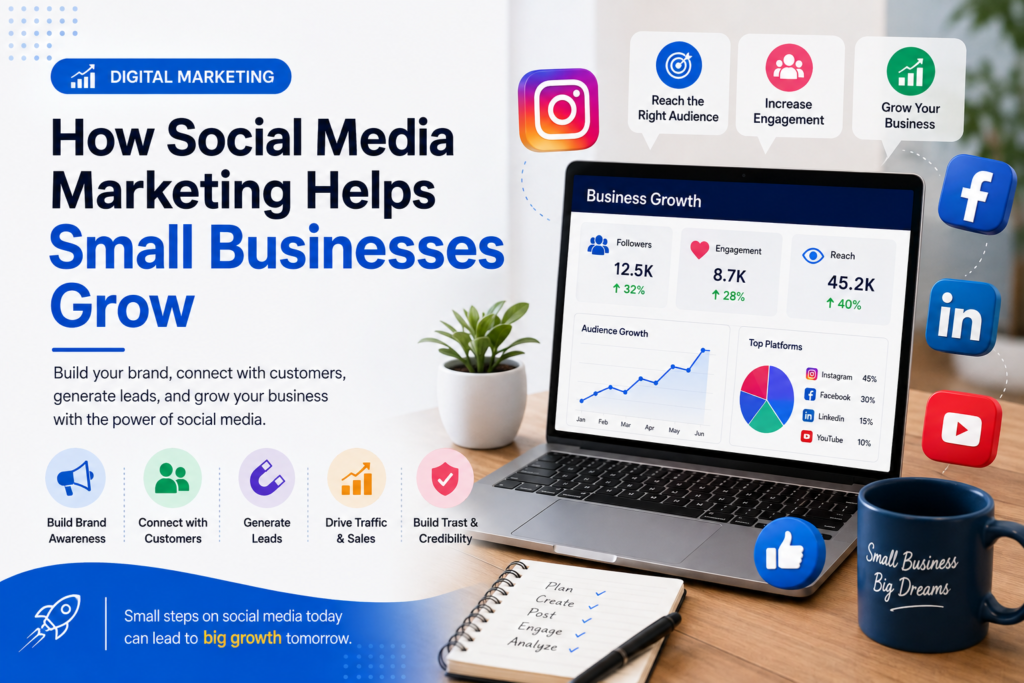
How Social Media Marketing Helps Small Businesses Grow

Introduction For small businesses, reaching new customers and building a strong brand can be challenging. Traditional marketing methods can be expensive, and competing with larger companies may seem difficult. This is where social media marketing can make a significant difference.Platforms such as Instagram, Facebook, LinkedIn, YouTube, and other social networks give small businesses an opportunity to connect with potential customers, showcase their products or services, and build an online presence.The best part is that businesses don’t always need a large marketing budget to get started. With valuable content, consistency, and a clear strategy, social media can become an effective tool for business growth. What Is Social Media Marketing for Small Businesses? Social media marketing is the process of using social media platforms to promote a business, connect with customers, increase brand awareness, and achieve marketing goals. For a small business, this could mean sharing product photos, creating educational videos, posting customer reviews, answering questions, or running social media campaigns. However, successful social media marketing is not just about gaining followers. The goal is to build meaningful relationships with the right audience and encourage them to take valuable actions, such as visiting a website, contacting the business, or making a purchase. How Social Media Marketing Helps Small Businesses Grow 1. Builds Brand Awareness One of the first challenges for a small business is getting people to recognize its brand. Social media provides a platform where businesses can consistently introduce themselves to potential customers. By sharing useful and engaging content, a business can increase its visibility and gradually build brand recognition. For example, a local bakery can post pictures of its products, share baking tips, introduce its team, and showcase customer experiences. Over time, this content can help people become familiar with the business. Consistency is important because customers are more likely to remember a brand when they regularly see useful and recognizable content. 2. Helps Reach the Right Audience Social media allows businesses to focus their marketing efforts on specific audiences. Instead of trying to reach everyone, a business can create content for people who are most likely to need its products or services. Businesses can consider factors such as: Understanding your audience helps you create content that is more relevant and useful. For example, a fitness business may create beginner workout tips, healthy lifestyle content, and educational videos for people interested in improving their fitness. 3. Creates Direct Customer Communication Social media gives small businesses a direct way to communicate with their customers. Customers can comment on posts, send messages, ask questions, and share feedback. Businesses can respond to these interactions and create stronger relationships with their audience. This two-way communication is valuable because customers don’t simply want to buy products. They also want to feel heard and supported. Quick and helpful responses can improve the customer experience and make a business appear more approachable. 4. Provides Cost-Effective Marketing Opportunities Marketing budgets can be limited for small businesses. Social media provides opportunities to promote a business through organic content without requiring a large advertising budget. Businesses can create posts, videos, stories, polls, and other forms of content using relatively simple tools. Paid advertising can also be used when a business is ready to invest in reaching a larger or more targeted audience. The important thing is to focus on creating content that provides value rather than assuming that spending more money automatically produces better results. 5. Helps Generate Leads Social media can help businesses attract potential customers. A lead could be someone who visits a website, fills out a contact form, sends a message, signs up for an email list, or shows interest in a service. Businesses can encourage these actions by using clear calls-to-action such as: “Learn More”“Visit Our Website”“Send Us a Message”“Book a Consultation” A clear call-to-action makes it easier for followers to understand what they should do next. 6. Drives Traffic to Your Website A social media profile can become an important source of website traffic. Businesses can share blog posts, product pages, service information, case studies, or other useful resources through their social media channels. For example, a digital marketing agency might publish a social media tip on LinkedIn and direct readers to a detailed blog post on its website. This creates a connection between social media and the business website and gives potential customers more opportunities to learn about the brand. 7. Builds Trust and Credibility People often want to know whether a business is trustworthy before making a purchase. Social media can help businesses demonstrate their expertise and credibility. Some useful content ideas include: When businesses consistently provide useful information and communicate honestly, they can gradually build trust with their audience. 8. Helps Understand Customer Needs Social media is also a valuable source of customer feedback. Comments, questions, polls, shares, and engagement can provide insights into what customers like and what problems they are trying to solve. For example, if many customers ask the same question about a product, the business can create a post or video explaining that topic. This means social media isn’t only a promotional tool—it can also help businesses understand their customers and improve their marketing. 9. Supports Local Business Growth Social media can be particularly useful for local businesses. Restaurants, salons, clothing stores, cafés, tutors, gyms, and other local businesses can use social media to connect with people in their communities. They can share: Creating content that feels connected to the local community can help a small business become more recognizable among nearby customers. How to Create a Social Media Strategy for Your Small Business Growing on social media requires more than posting whenever you have time. A simple strategy can make your efforts more organized and effective. Step 1: Set Clear Goals Decide what you want social media to achieve. Your goals could include increasing brand awareness, generating leads, driving website traffic, increasing engagement, or supporting sales. Step 2: Know Your Audience Research your ideal customers and understand their interests, challenges, and preferences. Step 3: Choose the

Uncategorized

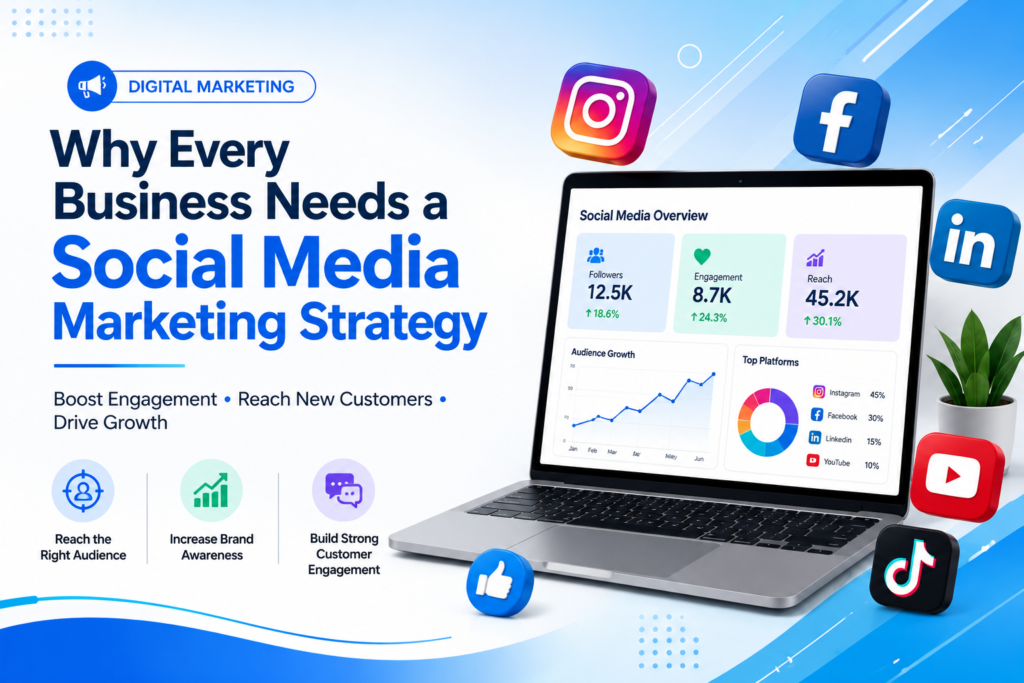
Why Every Business Needs a Social Media Marketing Strategy

In today’s digital world, social media has become much more than a platform for sharing photos and connecting with friends. It has become a powerful marketing tool that helps businesses build their brand, connect with customers, and increase sales. Whether you run a small local business, an online store, or a growing company, having a strong social media marketing strategy can help you reach the right audience and grow your business. What Is Social Media Marketing? Social media marketing is the process of promoting a business, product, or service through social media platforms such as Instagram, Facebook, LinkedIn, YouTube, and other digital channels. It involves creating useful and engaging content, interacting with followers, building brand awareness, and using social media advertising to reach potential customers. However, successful social media marketing is not simply about posting regularly. Businesses need a clear strategy that defines what to post, who to target, which platforms to use, and what goals they want to achieve. Why Is Social Media Marketing Important for Businesses? 1. Builds Brand Awareness Social media allows businesses to introduce their brand to a large audience. By consistently sharing valuable content, businesses can increase their visibility and help people recognize their brand. A strong visual identity, consistent messaging, and useful content can make a business more memorable. For example, a small clothing brand can use Instagram to showcase its products, share styling ideas, and post customer reviews. 2. Helps You Reach Your Target Audience One of the biggest advantages of social media marketing is the ability to reach a specific audience. Businesses can create content based on factors such as: This makes it easier to communicate with people who are more likely to be interested in the products or services being offered. 3. Increases Customer Engagement Social media creates a direct communication channel between businesses and customers. Customers can comment on posts, send messages, ask questions, and share feedback. Businesses can use these interactions to understand their audience better. Responding to comments and messages also helps create a positive relationship with customers. 4. Drives Website Traffic Social media can also help businesses bring visitors to their websites. For example, a business can share a blog post on LinkedIn or Instagram and encourage followers to visit its website to read the complete article. When social media content provides value and includes a clear call-to-action, it can encourage users to take the next step. 5. Supports Business Growth A well-planned social media strategy can contribute to business growth by increasing brand visibility, generating leads, and supporting sales. Businesses can use different types of content to move potential customers through the buying journey—from discovering a brand to considering its products and finally making a purchase. How to Create an Effective Social Media Marketing Strategy Creating a strategy doesn’t have to be complicated. You can start with these simple steps. Step 1: Define Your Goals First, decide what you want to achieve through social media. Your goals could include: Having clear goals makes it easier to measure your results. Step 2: Understand Your Audience Before creating content, understand who your target audience is. Think about their interests, problems, preferences, and the type of content they enjoy. The better you understand your audience, the easier it becomes to create content that connects with them. Step 3: Choose the Right Platforms You don’t need to be active on every social media platform. Choose platforms where your target audience is most active. For example: Focus on quality rather than trying to manage too many platforms at once. Step 4: Create Valuable Content Content is one of the most important parts of social media marketing. Instead of only promoting your products, create content that educates, entertains, inspires, or helps your audience. Some content ideas include: A good content strategy should balance promotional content with content that provides genuine value. Step 5: Be Consistent Consistency is important for building an active social media presence. Create a content calendar to plan your posts in advance. This can help you maintain a regular posting schedule and avoid last-minute content creation. Consistency doesn’t mean posting constantly. It means maintaining a schedule that you can realistically follow. Step 6: Track Your Performance A social media strategy should be measured regularly. Important metrics can include: Analyzing these metrics can help you understand what is working and what needs improvement. Common Social Media Marketing Mistakes Businesses can sometimes make simple mistakes that reduce the effectiveness of their social media efforts. Some common mistakes include: Posting without a strategy: Random posts may not support your business goals. Focusing only on sales: Constant promotional content can make audiences lose interest. Ignoring comments and messages: Social media is about communication, not just broadcasting. Trying to be everywhere: Managing too many platforms can reduce content quality. Not analyzing results: Without tracking performance, it becomes difficult to know what is working. Conclusion Social media marketing has become an important part of modern digital marketing. It gives businesses an opportunity to build brand awareness, connect with their target audience, generate traffic, and support business growth. However, success doesn’t come from simply creating social media accounts and posting occasionally. A successful approach requires clear goals, audience research, valuable content, consistency, and regular performance analysis. Whether you’re a small business owner or a growing brand, starting with a simple and focused social media marketing strategy can help you build a stronger online presence and create meaningful connections with your customers.

Scroll to Top